
Commercial Polished Concrete for South Australian Projects
Floortek has been delivering polished concrete floors for commercial builders and developers across South Australia since 2008. We grind, hone and polish new and existing concrete slabs — from nil exposure surface polish through to full aggregate reveal.
All work is self-delivered with our own crew, specified to the slab’s condition, traffic class and design intent, and priced for commercial construction programmes. No subcontracting. No residential.
We operate proven polished concrete systems including the Husqvarna SUPERFLOOR™ multi-step dry grinding and polishing process, the Husqvarna HiperTrowel™ wet trowel polishing system for programme-critical large floor pours, Grind and Seal for substrates requiring a film-forming sealer, and Terrazzacrete — a Hychem-approved polished concrete overlay system for existing substrates or where custom aggregate and colour is specified.
 Nil Exposure
 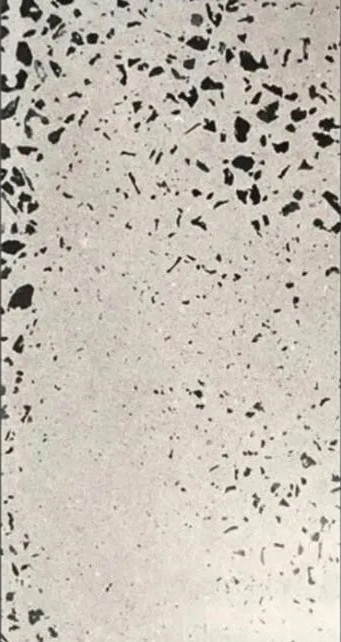 Random Exposure
 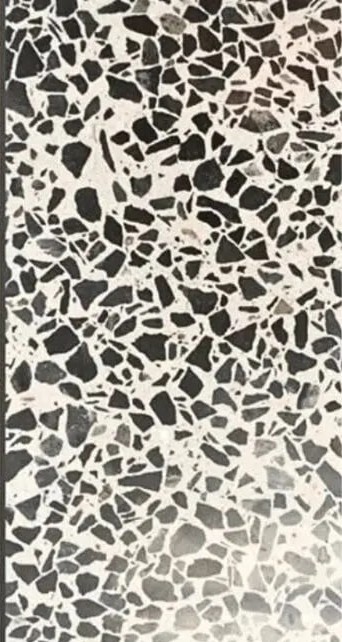 Full Exposure
 How We Polish
Multi-Step Diamond Polishing
Our primary polished concrete system. For nil exposure floors, we carry out an initial mechanical clean to remove contaminants and curing compound, apply a chemical densifier that penetrates the slab and reacts with free lime to crystallise and block the pores, then progressively polish through the grits to the desired sheen level. A penetrating sealer is applied and the floor is buffed to complete.
For random or full exposure floors, we start with aggressive metal bond diamond segments selected to the substrate condition and target exposure. The first cut exposes the aggregate and levels the floor. We continue progressive metal bond grinding, carry out a grout treatment to fill pinholes and hairline cracks, then transition into resin bond polishing with chemical densification before sealing and final buff.
Note: Floortek follows the Husqvarna SUPERFLOOR™ process and is currently completing formal accreditation with Husqvarna Australia.
HiperTrowel™ Wet Polish
The HiperTrowel™ system uses ride-on power trowels fitted with gyro driver attachments and Hiperflex TRW polishing pads to wet-polish concrete slabs in a fraction of the time of traditional grinding. Output of up to 1,000 m² per day makes this the preferred system for programme-critical floor pours on large open-plan projects.
Best suited to floors of 500 m² or more, without obstructions, where no aggregate exposure or floor levelling is required. Delivers a consistent salt and pepper finish.
Floortek application: Dan Murphy’s Unley — programme-critical pour polished in a fraction of the time
Grind and Seal
The concrete is diamond ground to the specified aggregate exposure, then sealed with a film-forming topical resin — typically an epoxy base coat with a UV-stable aliphatic polyurethane topcoat. The sheen comes from the sealer film rather than the polished concrete surface itself.
We specify grind and seal where the substrate is not suitable for mechanical polishing, where a high level of slip resistance is required (anti-slip aggregate broadcast into the sealer), or where the environment demands a chemical or stain-resistant impermeable barrier — food production, automotive workshops, commercial kitchens.
When to specify: Poor substrate quality · High slip resistance (R10–R12) · Chemical / stain environments · Anti-slip aggregate required
Applications
Retail & Hospitality
High-traffic floors that hold up under heavy foot traffic and trolleys
Education
Corridors, libraries and multipurpose facilities requiring durable finishes
Commercial Offices
Contemporary exposed concrete finishes for base-build and fitout projects
Supermarkets & Food Retail
Hard-wearing surfaces with non-slip finishes for food production areas
Public & Civic
Foyers, galleries and public spaces where aesthetics and durability intersect
Healthcare & Aged Care
Seamless, hygienic surfaces that meet clinical environment requirements
Our Process
Slab Assessment
We inspect the slab for concrete hardness, aggregate type, surface contamination and defects. This determines the tooling selection, grinding sequence and the achievable exposure level for the specified finish.
Surface Preparation & Initial Cut
For nil exposure floors, we carry out an initial mechanical clean with water to remove contaminants and curing compound from the burnished surface. For random or full exposure floors, aggressive metal bond diamond segments — selected to the substrate condition and target exposure — are used to expose the aggregate and level the floor. Grind depth is controlled to achieve the specified exposure: ≈0–1mm for nil exposure, ≈1–3mm for random exposure, or ≈4–5mm for full exposure.
Grout Treatment
Applicable to random and full exposure floors only. Where grinding has exposed pinholes and hairline cracks within the substrate, a grout treatment is applied to fill the majority of surface voids before the polishing sequence begins. Nil exposure floors do not require grout treatment as no deep grinding has taken place.
Chemical Densification
A penetrating chemical densifier is applied to the slab. It reacts with the free lime present in the concrete, crystallising and blocking the pores of the surface. This produces a harder, denser substrate with improved abrasion resistance and reduced porosity — a critical step in the long-term performance of any polished concrete floor.
Progressive Polishing
We transition to resin bond diamond polishing pads and work progressively through the grits to achieve the specified sheen level — from a low-sheen satin finish through to high-gloss. Each grit stage removes the scratch pattern left by the previous, building clarity and reflectivity in the surface.
Penetrating Sealer & Final Buff
A penetrating sealer is applied to protect the surface and lock in the finish. The floor is then given a final buff to complete the mechanical polishing and sealing process. The result is a durable, low-maintenance floor that holds its finish without stripping or recoating.
Quote Your Polished Concrete Project
We quote commercial projects across South Australia. Send us your plans or a brief description and we’ll get back to you with a price.
Get a QuoteFrequently Asked Questions
What’s the difference between polished concrete and grind and seal?
Mechanically polished concrete (SUPERFLOOR™ or HiperTrowel™) achieves its gloss by progressively refining the concrete surface itself through a multi-step grinding and polishing sequence — no film-forming sealer is applied. Grind and Seal achieves its gloss from a topical epoxy or polyurethane sealer applied over a ground surface. Mechanical polish is more durable long-term with no recoating required; grind and seal installs faster, works on lower-quality substrates, and allows anti-slip aggregate to be broadcast into the sealer where required.
How long does polished concrete last?
Mechanically polished concrete has an indefinite lifespan — the gloss is achieved through the concrete surface itself, not a coating that wears away. Husqvarna diamond maintenance pads restore gloss after years of traffic without stripping or recoating. Grind and seal systems require periodic re-sealing, typically every 3–7 years depending on traffic volume and conditions.
Can you polish an existing concrete slab?
Yes. Both SUPERFLOOR™ and Grind and Seal can be applied to existing concrete slabs. The slab must meet minimum compressive strength requirements (C25/C30 minimum for SUPERFLOOR™) and be free of contamination that would prevent a consistent result. We assess every substrate before committing to a finish level.
What aggregate exposure levels are available?
Floortek offers three standard exposure levels: Nil Exposure (≈0–1mm grind depth — a refined cream finish with no visible aggregate); Random Exposure (≈1–3mm — coarse aggregate randomly revealed across the surface); and Full Exposure (≈4–5mm — full aggregate reveal). Exposure level affects appearance, price, and the grinding process required. A field mock-up is provided on all SUPERFLOOR™ projects before work commences.
What is Terrazzacrete?
Terrazzacrete is a Hychem-approved cementitious overlayment system using a Velosit polymer binder — not standard Portland cement. Custom aggregates, glass, shell, or recycled material are set into the overlay to create a bespoke terrazzo-style floor. Floortek is a Hychem-approved Terrazzacrete applicator. The system achieves 50–60 MPa compressive strength, cures rapidly, and polishes to the same finish levels as natural concrete.
